Slawische Mythologie: Götter, Wesen und Symbole
Eine Einführung in die slawische Welt, in der Donnergötter, Waldgeister, Mondsymbole und alte Rituale aufeinandertreffen. Lies es als Karte, nicht als Dogma.
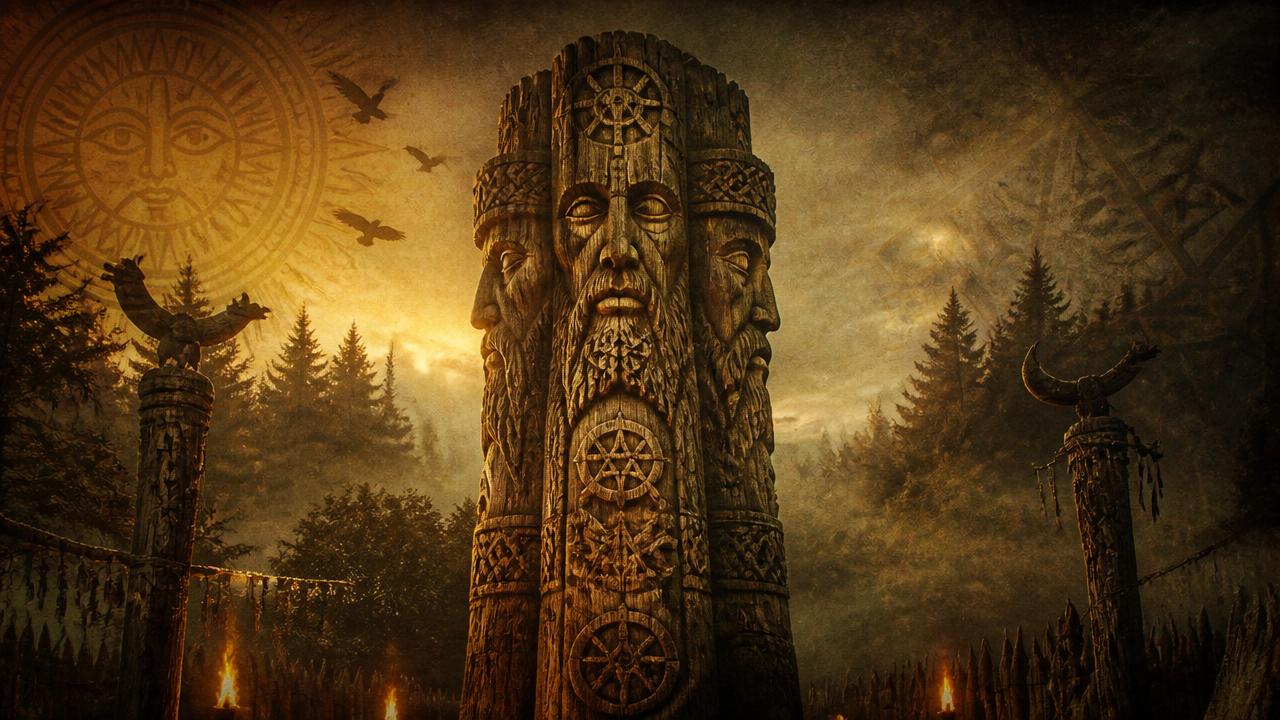
Was ist die slawische Mythologie?
Die slawische Mythologie ist eine Sammlung von Geschichten, Göttern, Ritualen und Symbolen, die die slawischen Völker Ost-, Mittel- und Südeuropas über Jahrhunderte hinweg begleitet haben. Es handelt sich nicht um ein einheitliches Religionsbuch — vielmehr um ein lebendiges Landschaftsgedächtnis, das mündlich, durch Bilder, Lieder, Bräuche und Stickereien weitergegeben wurde.
Im Gegensatz zum griechischen oder römischen Pantheon wurden die slawischen Götter nicht in einem einzigen kanonischen Werk festgehalten. Wir kennen ihre Namen aus fragmentarischen Aufzeichnungen christlicher Chronisten, aus Wochentagsnamen, Ortsbezeichnungen, aus der Folklore und aus neueren Rekonstruktionsversuchen.
Drei Wurzeln der slawischen Weltanschauung
- Die Natur als lebendiges Etwas. Berge, Flüsse, Wälder, Stürme und Felder waren keine tote Kulisse. Sie waren die Heimat von Geistern, Göttern und Ahnen.
- Zyklus und Schwelle. Das Leben wurde als ein ständiger Kreislauf wahrgenommen: Tag und Nacht, Winter und Sommer, Geburt und Tod. Jede Schwelle war heilig.
- Sippe, Ahnen und Gemeinschaft. Der Mensch lebte nicht allein. Er war ein Glied in einer Kette, die in die Vergangenheit reicht und sich in die Zukunft fortsetzt.
Hauptgestalten
- Perun — Gott des Donners, des Himmelsfeuers und der militärischen Ordnung.
- Veles — Herr des Viehs, der Wege, des Handels, der Dichtung und der Unterwelt.
- Svarog — der himmlische Schmied, das schöpferische Feuer, Vater der Welt.
- Daschbog — der Sonnengott, Geber des Lichts und der Ernte.
- Mokosh — Göttin der feuchten Erde, des Webens und der Frauenschicksale.
Wesen und Symbole
Neben den Göttern wird die slawische Welt von Waldgeistern (Leshys), Wassergeistern (Rusalkas), Hausgeistern (Domovoy) und Feuergeistern (Zmaj) bevölkert. Schlüsselsymbole sind das Kolovrat (Sonne und Jahr), die Lunula (Mond und weiblicher Rhythmus), die Hände Gottes (Schutz und die vier Himmelsrichtungen) und der Alatyr (das Weltenzentrum).
Wie liest man diese Welt heute?
Die slawische Mythologie ist keine Gebrauchsanweisung für das Leben. Sie ist eher ein Spiegel, in dem wir unsere Beziehung zur Natur, zu den Lebenszyklen und dazu, was es bedeutet, ein Mensch zwischen Himmel und Erde zu sein, erkennen können.
Vnorias Blickwinkel
Wir müssen nicht so an die alten Götter glauben wie unsere Vorfahren. Es genügt, wenn wir sie als Sprache verstehen — eine Sprache, mit der uns die Natur und das Gedächtnis des Volkes lehren, über Dinge zu sprechen, die moderne Worte nur schwer benennen können.