Slawische Volksrituale und saisonale Feste
Von der Koliada über Kupala bis hin zu Dziady. Das slawische Jahr war durchwoben von Ritualen, die den Menschen mit der Natur, den Ahnen und dem Wandel der Jahreszeiten verbanden.
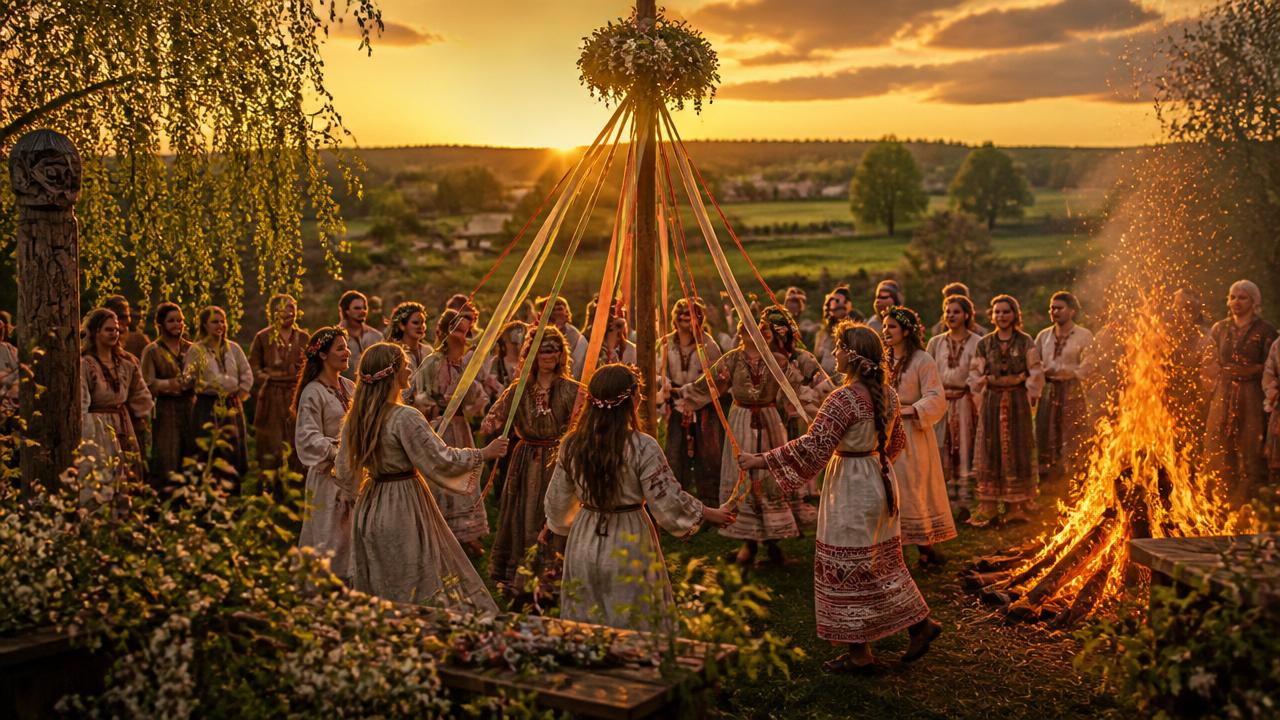
Das slawische Jahr als ritueller Kreis
Für unsere Vorfahren war das Jahr nicht bloß eine Abfolge von Monaten. Es war ein Kreis aus Zeremonien, die den Menschen mit der Natur, den Ahnen und den großen Zyklen des Lebens verbanden. Jedes Fest war eine Schwelle — ein Ort, an dem das Alte endet und das Neue beginnt.
Koliada und die Wintersonnenwende
In der längsten Nacht des Jahres wurden Feuer entzündet, Speisen wurden auch für die Ahnen auf dem Tisch gelassen und es wurden Lieder gesungen. Die Wintersonnenwende war ein Fest der Hoffnung: Das Licht wurde gerade neu geboren und würde nun wachsen.
Masleniza und der Abschied vom Winter
Vor der Fastenzeit fanden fröhliche Umzüge, Maskeraden, Tänze und Gelage statt. Die Masken waren nicht nur zur Unterhaltung da — sie waren ein Weg, den Winter, die bösen Mächte und die Traurigkeit aus dem Dorf zu vertreiben.
Frühlingsrituale: Morena und das Willkommenheißen des Frühlings
Im Frühling wurde die Strohfigur der Morena — das Symbol für Winter und Tod — hinausgetragen oder verbrannt. Der Frühling wurde begrüßt, Birken wurden geschmückt, Eier bemalt. Es war eine Zeit der Reinigung und des Neuanfangs.
Kupala — Feuer, Wasser und Wachstum
Die Sommersonnenwende, oft in der Nacht vom 23. auf den 24. Juni. Man sprang über Feuer, badete in Flüssen und suchte nach der Farnblüte. Kupala verband Feuer, Wasser, Liebe und Fruchtbarkeit.
Die Ernte und Opfergaben der Erträge
Wenn das Getreide reifte, war die erste Garbe heilig. Sie wurde den Göttern geopfert, über die Tür gehängt oder unter ein Bild gelegt. Die Ernte war ein Geschenk, das nach Dankbarkeit verlangte.
Dziady — Die Begegnung mit den Ahnen
Im Herbst, besonders zur Zeit der Ahnenfeste, wurden Kerzen entzündet, Speisen zu den Gräbern gebracht und die Vorfahren eingeladen. Die Grenze zwischen den Lebenden und den Toten war dünn, aber freundlich.
Wie tragen wir sie heute?
Wir müssen die alten Rituale nicht exakt kopieren. Wir können das daraus mitnehmen, was uns heute gut tut: Die Dankbarkeit für die Ernte, Zeit für die Ahnen, das Feiern der Sonnenwende, des Feuers und des Wassers.
Vnorias Sichtweise
Rituale sind kein Zauber. Sie sind Wege, die gewöhnliche Zeit zu unterbrechen und wahrzunehmen: Das Licht kehrt zurück, das Wasser fließt, das Korn reift, die Ahnen sind immer noch präsent. Das sind Dinge, die ein Innehalten verdienen.